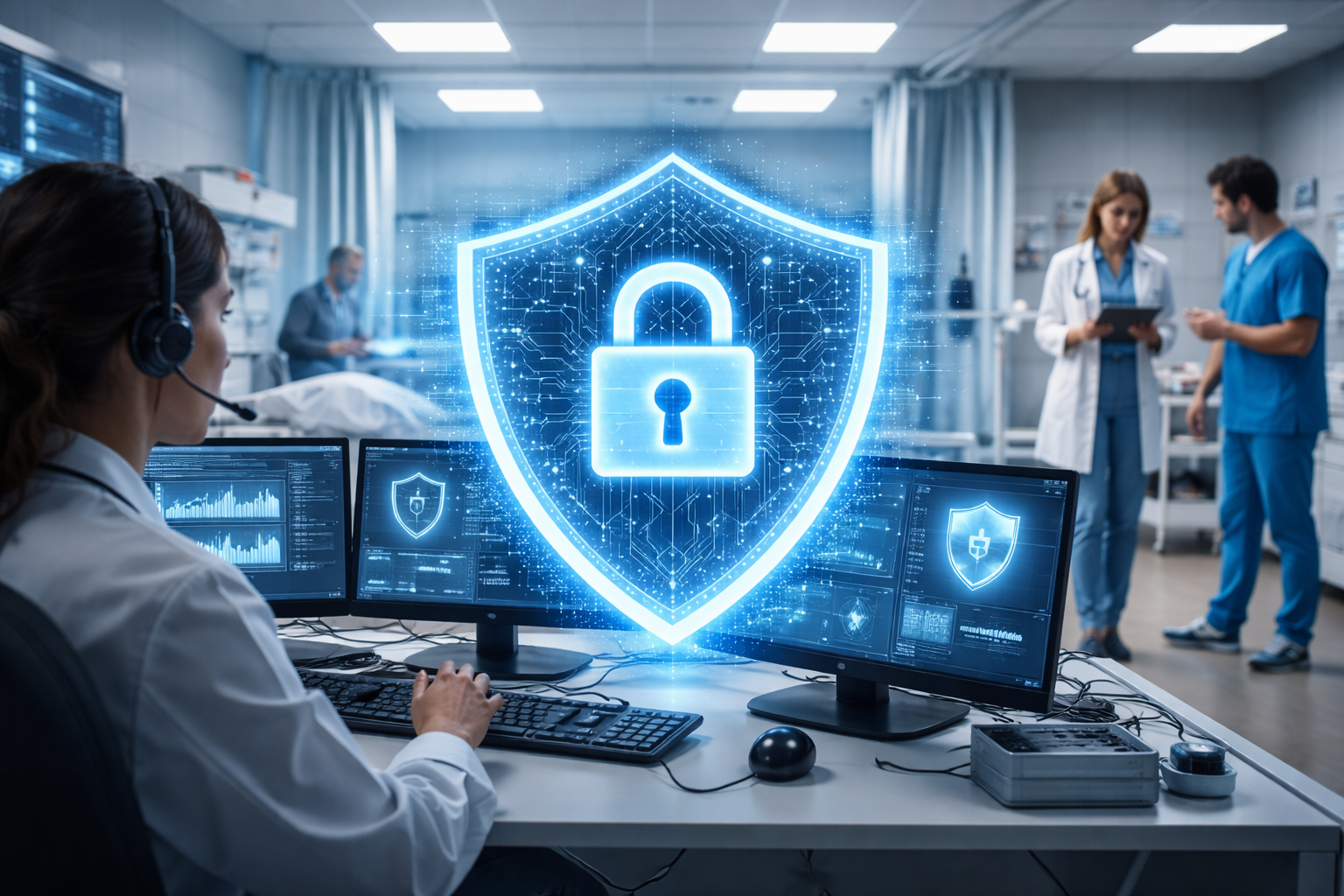

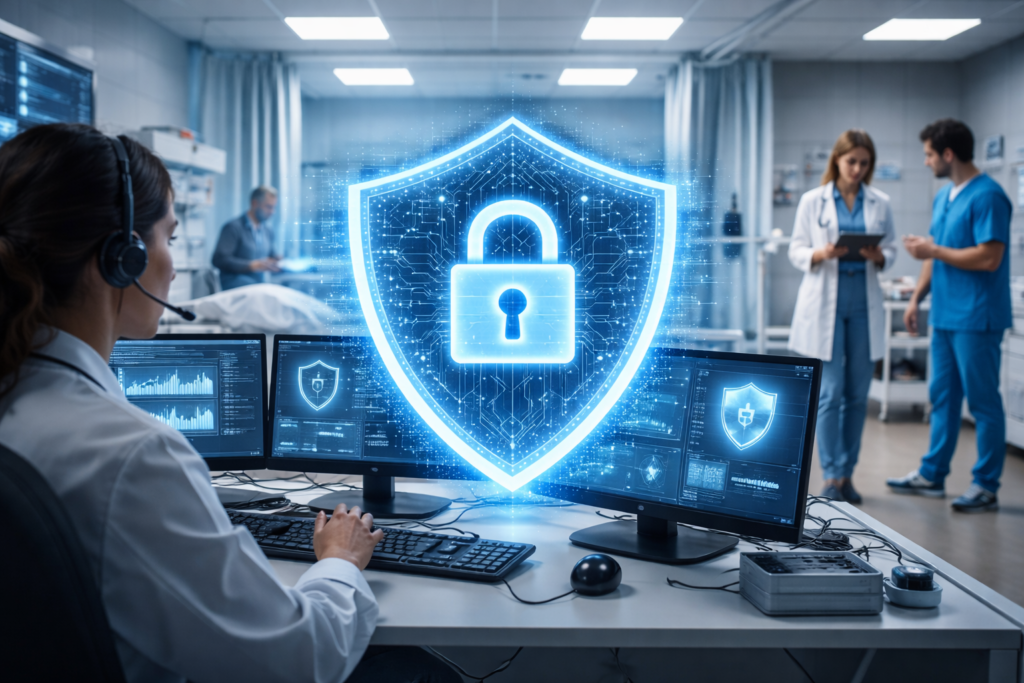
In 2026, cybersecurity is no longer just an IT concern for hospitals in the United States — it is a matter of patient safety. As hospitals become more digitally connected through electronic health records, smart medical devices, telehealth systems, and cloud platforms, protecting healthcare data and infrastructure has become a national priority.
Cybersecurity now plays a direct role in protecting patient privacy, preventing operational shutdowns, and safeguarding life-saving medical equipment.
Why Cybersecurity Is Critical for U.S. Hospitals
American hospitals manage massive amounts of sensitive information every day, including:
- Electronic Health Records (EHRs)
- Insurance and billing information
- Social Security numbers
- Prescription records
- Diagnostic imaging data
In addition, hospitals rely on connected systems such as:
- Smart infusion pumps
- MRI and CT scanners
- Remote patient monitoring devices
- Telehealth platforms
- Digital scheduling and pharmacy systems
If any of these systems are compromised, patient care can be disrupted.
The Growing Threat Landscape
Hospitals are attractive targets for cybercriminals because:
- Healthcare data is highly valuable on the black market
- Hospitals cannot afford long system downtime
- Emergency services create urgency that attackers exploit
Common threats facing U.S. hospitals in 2026 include:
1. Ransomware Attacks
Hackers encrypt hospital data and demand payment to restore access. These attacks can halt surgeries, delay lab results, and disrupt emergency room operations.
2. Phishing Scams
Hospital staff may receive fake emails designed to steal login credentials or install malware.
3. Medical Device Vulnerabilities
Connected medical equipment can be exploited if not properly secured.
4. Insider Threats
Accidental or intentional misuse of patient data by employees.
Key Ways Cybersecurity Protects USA Hospitals
1. Data Encryption
Hospitals use advanced encryption to protect patient records. Even if hackers intercept data, encryption makes it unreadable without authorization keys.
Encryption applies to:
- Data stored on servers
- Information transmitted between devices
- Cloud-based systems
2. Multi-Factor Authentication (MFA)
Healthcare staff must verify their identity through multiple steps before accessing sensitive systems.
For example:
- Password
- Security code
- Biometric verification
This significantly reduces unauthorized access.
3. Network Monitoring and Threat Detection
Hospitals now use AI-powered monitoring systems that:
- Detect unusual login patterns
- Identify suspicious network traffic
- Flag abnormal device behavior
These systems can stop attacks before they spread.
4. Secure Medical Devices
Medical equipment manufacturers now build devices with:
- Firmware security updates
- Encrypted communication
- Access control systems
Hospitals regularly patch and update devices to reduce vulnerabilities.
5. Staff Training Programs
Human error is one of the biggest cybersecurity risks. Hospitals invest in:
- Phishing awareness training
- Password security education
- Safe data handling procedures
Well-trained employees are the first line of defense.
Protecting Patient Privacy
U.S. hospitals must comply with strict healthcare privacy laws. Cybersecurity programs ensure that:
- Only authorized personnel access patient records
- Audit logs track who views sensitive information
- Data breaches are reported and investigated
By strengthening digital safeguards, hospitals protect both medical data and patient trust.
Securing Telehealth and Remote Care
Telehealth usage has grown rapidly across the United States. Cybersecurity now protects:
- Video consultations
- Remote diagnostics
- Patient portal logins
- Prescription transmissions
Secure communication protocols prevent interception or tampering.
The Role of Artificial Intelligence in Hospital Security
In 2026, AI is helping hospitals detect threats faster than ever before.
AI systems can:
- Analyze millions of network events per second
- Predict vulnerabilities before exploitation
- Automatically isolate infected systems
This proactive approach reduces response times and limits damage.
Disaster Recovery and Backup Systems
Even with strong defenses, hospitals prepare for worst-case scenarios.
They maintain:
- Secure off-site data backups
- Redundant systems
- Emergency response plans
- Cyber incident response teams
If a cyberattack occurs, hospitals can restore systems quickly and continue patient care.
Federal and State Support
The U.S. government provides cybersecurity guidance and funding support to healthcare institutions. Programs encourage:
- Infrastructure modernization
- Cybersecurity risk assessments
- Information sharing between hospitals
Collaboration between hospitals and government agencies strengthens national healthcare resilience.
Challenges Hospitals Still Face
Despite progress, challenges remain:
- Limited cybersecurity budgets in rural hospitals
- Shortage of cybersecurity professionals
- Rapidly evolving cyber threats
- Increasing number of connected devices
Smaller hospitals often face greater risk due to limited resources.
The Future of Hospital Cybersecurity
Looking ahead, experts expect:
- Greater integration of AI threat detection
- Zero-trust network architectures
- Stronger cloud security standards
- Increased federal cybersecurity funding
- Improved security for Internet of Medical Things (IoMT) devices
Cybersecurity will continue evolving alongside healthcare technology.
Conclusion
Cybersecurity in U.S. hospitals is not just about protecting data — it is about protecting lives. As healthcare becomes increasingly digital in 2026, strong cybersecurity measures ensure that hospitals can deliver safe, uninterrupted care.
From encryption and AI monitoring to staff training and device security, hospitals across America are strengthening their defenses against modern cyber threats.
In today’s connected healthcare environment, cybersecurity is as essential as medical expertise itself.