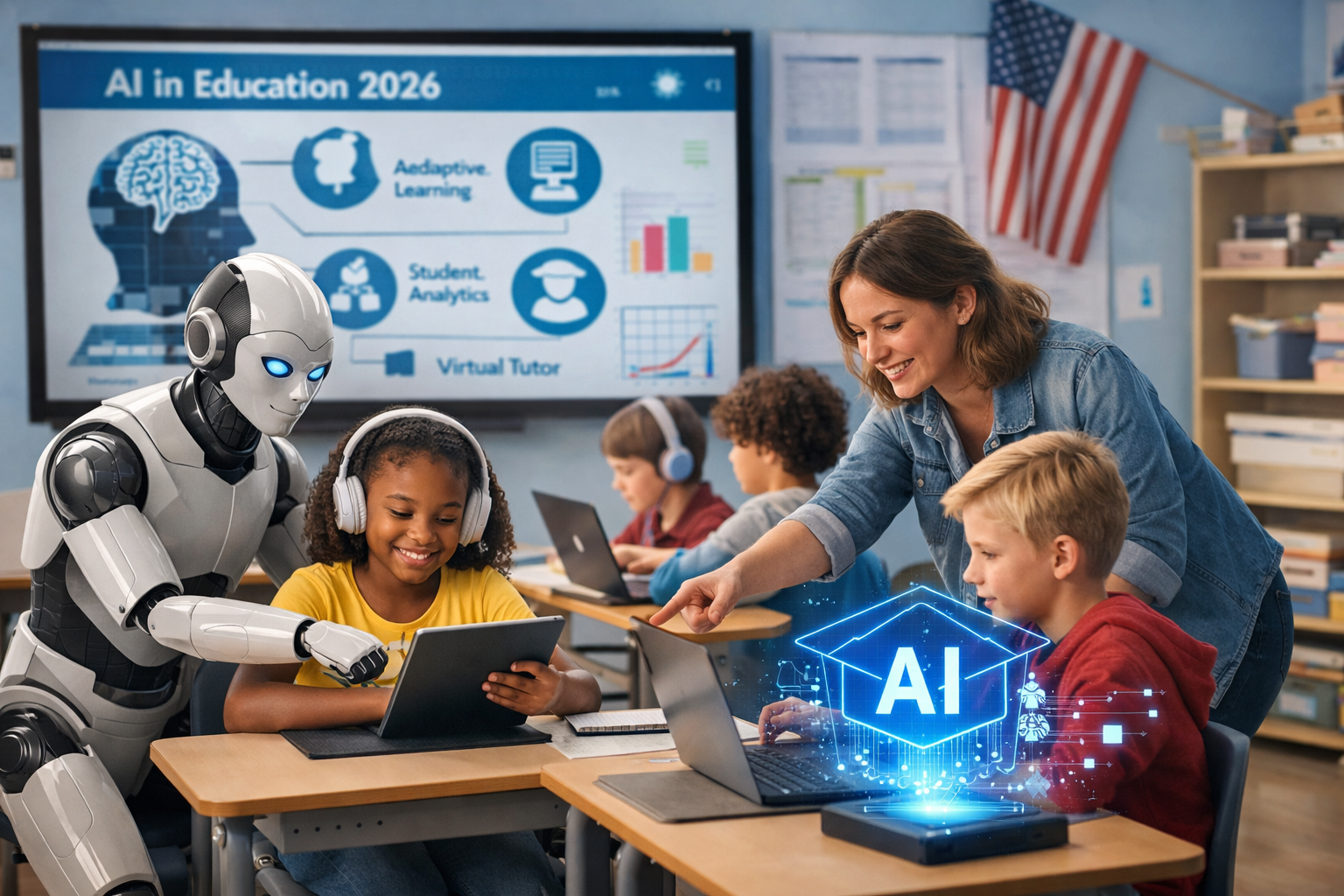

In 2026, artificial intelligence is no longer a futuristic concept in American public schools — it is a daily reality. From personalized learning platforms to automated grading systems, AI is transforming how students learn and how teachers teach. What began as experimental pilot programs just a few years ago has evolved into structured district-wide adoption across many states.
Artificial intelligence in American public schools is not replacing teachers. Instead, it is becoming a support system — enhancing instruction, improving efficiency, and helping close long-standing achievement gaps.
The Current State of AI in U.S. Public Education
By 2026, AI tools are being used in thousands of public schools across the United States. Districts in states like California, Texas, Florida, and New York have implemented AI-powered systems to assist with:
- Personalized lesson planning
- Adaptive math and reading programs
- Automated grading assistance
- Student performance tracking
- Early intervention alerts
- Language translation for multilingual classrooms
While adoption levels vary by district funding and infrastructure, AI integration is now part of broader digital transformation efforts in public education.
Personalized Learning at Scale
One of the biggest impacts of AI in American classrooms is personalized learning.
Traditional classrooms often require one teacher to manage 20–30 students, each with different learning speeds. AI-powered learning platforms can:
- Adjust reading levels automatically
- Provide instant feedback
- Offer targeted practice exercises
- Identify knowledge gaps in real time
For example, if a student struggles with fractions, an AI system can automatically generate additional exercises, video explanations, and quizzes tailored to that specific weakness.
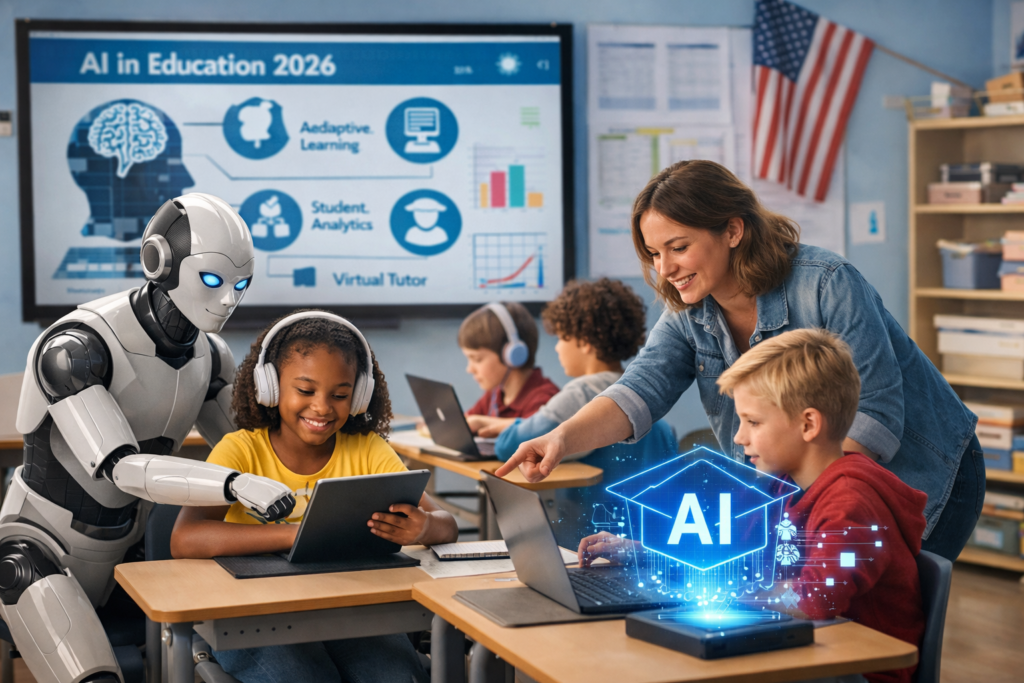
This level of personalization was nearly impossible to deliver at scale before AI tools became mainstream.
AI as a Teacher Assistant
In 2026, many teachers describe AI not as a replacement, but as a “digital assistant.”
AI systems help educators by:
- Drafting lesson outlines
- Suggesting classroom activities
- Generating quizzes
- Creating differentiated assignments
- Translating parent communications
Grading is another major area of change. AI can now evaluate multiple-choice tests instantly and even provide structured feedback on essays based on rubrics.
This reduces administrative workload and allows teachers to spend more time on direct student interaction.
Closing Achievement Gaps
AI has shown potential in helping reduce achievement gaps across different socioeconomic groups.
Students in underfunded districts often struggle with:
- Limited access to tutors
- Large classroom sizes
- Outdated materials
AI-powered platforms provide 24/7 access to learning assistance, allowing students to practice outside school hours.
In rural American communities, where teacher shortages are common, AI tools support blended learning environments and remote instruction models.
Special Education and Accessibility
AI has made meaningful progress in supporting students with disabilities.
In 2026, AI tools assist with:
- Speech-to-text transcription
- Real-time captioning
- Adaptive reading tools for dyslexia
- Predictive text assistance
- Behavioral pattern analysis
Students with learning differences benefit from customized pacing and accessibility features that were previously limited or costly.
AI Literacy: Teaching Students About AI
Another major development in 2026 is AI literacy education.
Many public schools have introduced basic AI curriculum modules that teach students:
- What artificial intelligence is
- How machine learning works
- Ethical implications of AI
- Data privacy awareness
- Responsible AI use
Rather than banning AI tools, schools are increasingly teaching students how to use them responsibly.
Concerns and Challenges
Despite its benefits, AI adoption in American public schools has raised concerns.
1. Data Privacy
Parents and educators worry about:
- Student data collection
- Third-party access
- Data storage security
Districts now require stricter compliance policies to protect student information.
2. Academic Integrity
AI-generated essays and homework assistance have led to new discussions about plagiarism and originality.
Schools have responded by:
- Updating academic honesty policies
- Redesigning assignments
- Incorporating in-class assessments
3. Equity in Access
Not all schools have equal access to:
- High-speed internet
- Updated devices
- AI software subscriptions
Federal and state funding programs aim to reduce these disparities, but access remains uneven.
The Role of Teachers in an AI-Enhanced Classroom
In 2026, teachers remain central to the learning process.
AI cannot replace:
- Emotional intelligence
- Classroom management
- Student mentorship
- Social development guidance
Instead, AI functions as a tool — similar to calculators or computers when they were first introduced.
Educators who embrace AI as a support mechanism tend to see improved student engagement and efficiency.
How AI Is Changing School Administration
Beyond the classroom, AI also supports administrative tasks:
- Enrollment forecasting
- Attendance tracking
- Budget analysis
- Transportation routing
- Risk detection for dropouts
Predictive analytics help administrators identify students at risk of falling behind and intervene earlier.
State-Level Adoption Trends
By 2026:
- California has integrated AI literacy standards into digital education frameworks.
- Texas districts widely use AI tutoring software in math and reading.
- Florida public schools emphasize AI-assisted virtual learning options.
- New York City schools have implemented AI-supported language translation systems for multilingual families.
Adoption levels vary, but AI integration is expanding nationwide.
The Future of AI in American Public Schools
Looking ahead, experts predict several trends:
- More AI-driven personalized curriculums
- Stronger AI ethics education
- Increased federal guidelines on student data protection
- AI-powered career readiness programs
- Integration with virtual and augmented reality learning
By the end of the decade, AI may become as standard as internet access in schools.
Conclusion
AI in American public schools in 2026 represents a turning point in education. It is not about replacing teachers or automating childhood learning. It is about using technology to enhance instruction, improve efficiency, and expand access to quality education.
While challenges remain — especially regarding privacy and equitable access — AI is steadily becoming a core component of the modern classroom.
The question is no longer whether AI belongs in American public schools. The real question is how schools can use it responsibly, ethically, and effectively to support the next generation of learners.